
Last updated November 22, 2026
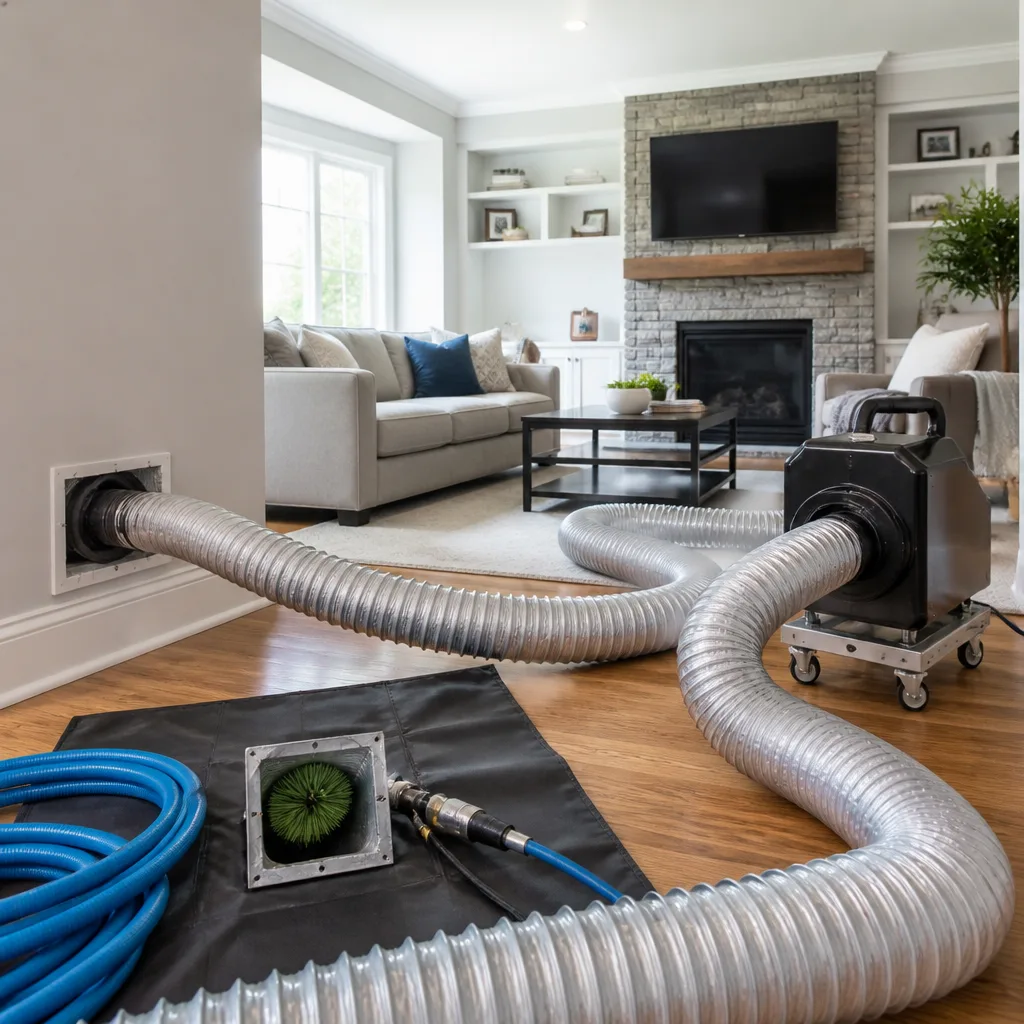 Whole-home duct cleaning
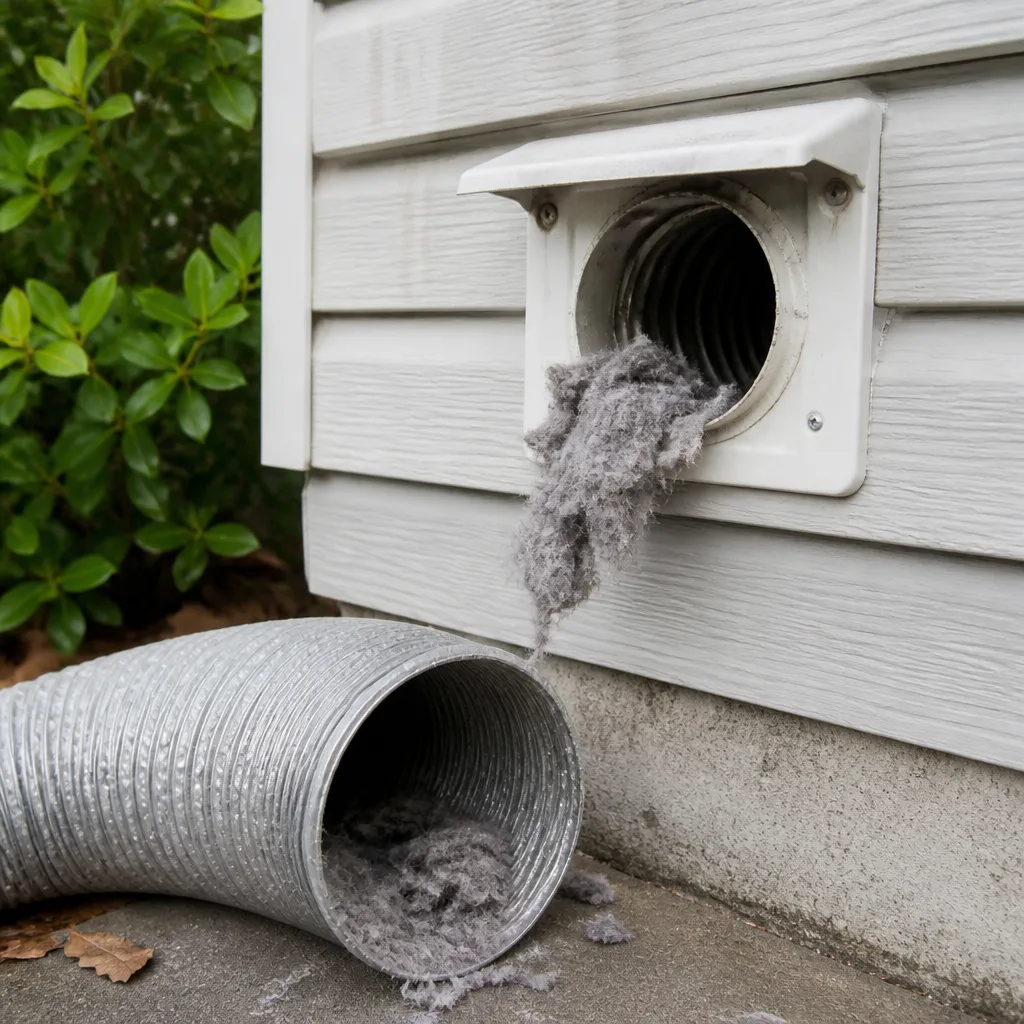 Dryer vent cleaning
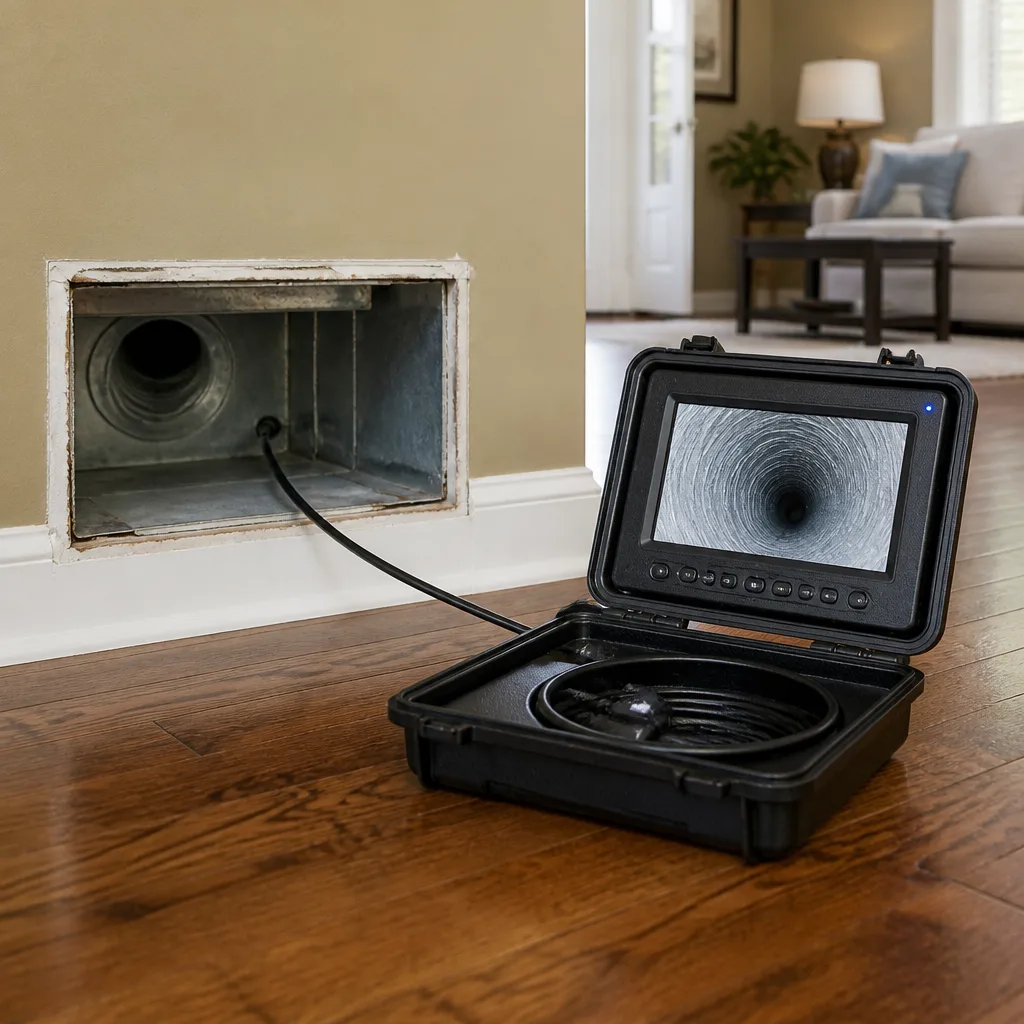 Camera inspection
 Sanitizing & deodorizing
Whole-system duct and dryer vent check with before-and-after photos - you see exactly what came out of your vents
That "$99 whole-house special" is a bait ad - the real number appears once they are in your hallway, or the "clean" is a shop-vac at the register. We photograph the inside of your ducts before and after instead.
Air Duct Cleaning Maintenance Schedule: What to Do and When
The most common piece of duct-cleaning advice in circulation – clean every three to five years – was written for a generic American house in a generic American climate. It doesn’t account for what a single high-AQI week in greater Los Angeles leaves behind inside your ductwork, or for the fact that a household with two shedding dogs and a recent kitchen remodel is loading its system at a completely different rate than the house next door. In Silver Lake, where dense tree canopy, older housing stock, and seasonal smoke advisories all compound the load, a fixed calendar is the wrong tool. What you need is a tiered schedule keyed to your household’s own contamination factors. This guide lays that out: what to do monthly, every six months, and annually, plus the off-cycle triggers that override all of it.
Quick Answer
Most Silver Lake homes need a full professional duct cleaning every three to five years, but that interval shortens to every one to two years if you have multiple pets, have completed a renovation, or live through repeated wildfire smoke seasons. Between professional cleanings, the work is light and frequent: check filters monthly, clean supply registers every six months, and pair the duct appointment with dryer vent cleaning on its own annual track. The single biggest mistake is treating dryer vents and ductwork on the same schedule.
Styles & brands we work with
- Whole-home duct cleaning
- Dryer vent cleaning
- Camera inspection
- Sanitizing & deodorizing
Table of Contents
- The Load-Factor Matrix: What Actually Drives Contamination
- Your Tiered Maintenance Schedule: Monthly, Six-Month, Annual
- The Professional Service Cycle: What Triggers a Full Cleaning
- Why Dryer Vents Run on a Faster, Separate Cadence
- Post-Renovation Protocol: The Off-Cycle Cleaning
- Logging Baseline Data So the Next Technician Can Measure
- Wildfire Smoke and High-AQI Weeks in Silver Lake
- Where Filtration and Duct Repair Fit the Schedule
The Load-Factor Matrix: What Actually Drives Contamination
A cleaning interval is a calculation, not a rule of thumb. Each of the following factors accelerates contamination independently, and a household with three of them stacked doesn’t just need cleaning “a bit sooner” – it needs a fundamentally different cadence. Here’s how we think about each one.
- Pets. Dander and hair are fine particulates that pass through standard filters and settle in the duct lining. Two or more pets shifts a three-to-five-year interval toward the two-year end.
- Smoking indoors. This is the heaviest load factor of the group because the residue is sticky. It coats duct surfaces and turns into a collection layer for everything else. An annual cleaning becomes the realistic number.
- Recent renovation. Drywall dust and insulation fibers are heavier and sharper than ordinary household dust, and they load the system in days rather than years. This is an off-cycle trigger, not an interval adjustment – covered in detail further down.
- Wildfire smoke. Smoke doesn’t settle in ducts the way dust does, but it leaves fine ash and odor compounds on the interior surfaces and inside the air handler. Repeated smoke seasons in Silver Lake mean the interval shortens and sanitizing becomes a routine add-on rather than an occasional one.
- System age and design. Leaky duct joints and older flexible ductwork collect far more than sealed metal runs. If your system has never been sealed, the contamination rate is higher and faster. That’s why air duct cleaning Silver Lake work so often pairs a cleaning with a sealing pass.
The point of the matrix isn’t to scare you into annual cleaning. It’s to give you a defensible reason to pick your own number. A sealed system with no pets, no smoking, and no renovation can reasonably sit toward five years. A vintage Silver Lake bungalow with a dog, a smoker, and a 2023 kitchen remodel shouldn’t wait two.
Your Tiered Maintenance Schedule: Monthly, Six-Month, Annual
Professional cleaning is the anchor event. Everything else is the maintenance that keeps the system from loading up faster than necessary. Here is how we’d split it, and this is the section most people screenshot and stick on the fridge.
Every Month
- Check the air filter and replace or clean it. Dirty filters bypass contamination into the ducts, so this single habit does the most to protect your cleaning interval.
- Look at the return registers for visible dust buildup or dark staining. Early staining is the first sign of a load problem.
- Confirm no furniture or rugs are blocking the return.
Every Six Months
- Remove and wash supply and return register covers. The grilles catch a surprising amount of dust and are easy to clean with a damp cloth and mild soap.
- Do a visual inspection of accessible duct runs in the attic or crawlspace if you can reach them safely. Look for disconnected joints, crushed flex, or visible moisture. Don’t disassemble anything.
- Walk the exterior and look at the fresh-air intake and any exhaust terminations for blockage from vegetation.
Annually
- Schedule dryer vent cleaning without exception. This belongs on the annual list, not the multi-year one.
- Have the air handler and coil inspected for dust buildup. This is what we cover under HVAC cleaning, and it’s separate from ductwork.
- Review your filter choice. If you’ve changed pets, had a baby, or moved to a higher-MERV filter, the system may need a different filtration setup. Honeywell and Aprilaire products are the two we install and upgrade most often, and both can be fitted during a cleaning visit.
The Professional Service Cycle: What Triggers a Full Cleaning
A full professional cleaning is a mechanical process, not a vacuum pass. In our work, the trigger events are usually one of four things: the interval has elapsed, a load factor has kicked in, a system change was made (new HVAC unit, new duct run, or a repair), or the homeowner is noticing symptoms – persistent dust on surfaces after cleaning, musty smell when the system runs, or allergy symptoms that are worse indoors. Any one of those is a valid reason to book an inspection.
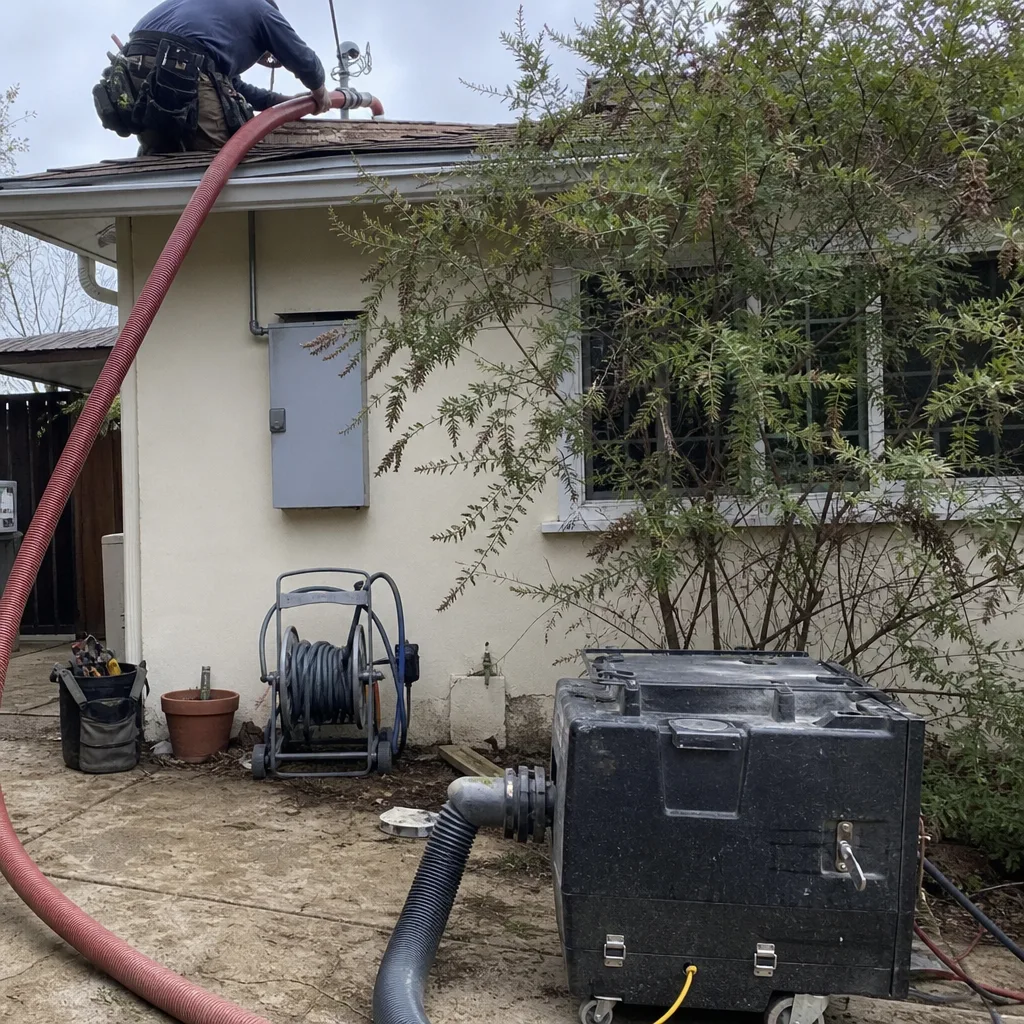
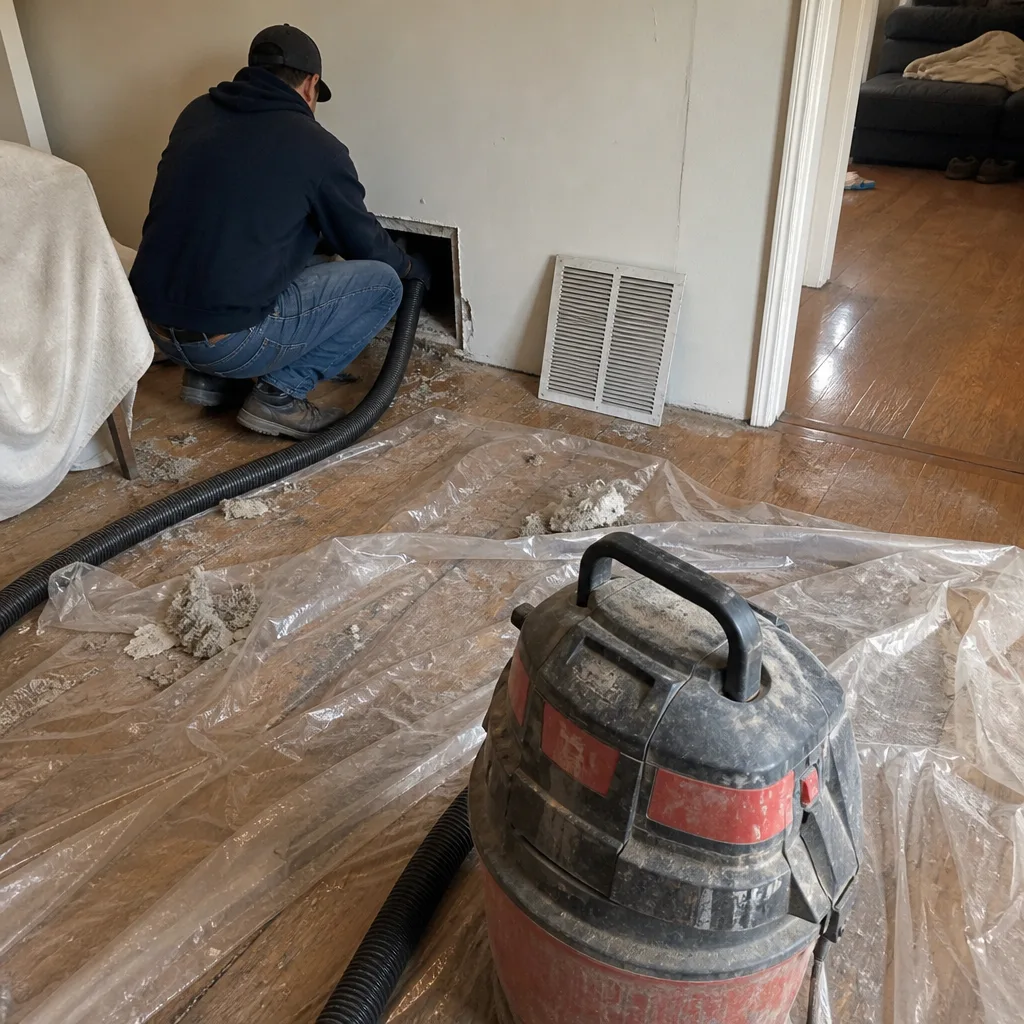
A proper cleaning uses purpose-built equipment, not a shop vac. We use Rotobrush rotary brush systems for mechanical agitation of duct lining and Nikro negative-pressure tools for extraction, and we set up Abatement Technologies containment to prevent dislodged material from recirculating into living space during service. This is containment gear drawn from environmental remediation, and it’s the difference between a cleaning that removes contamination and one that moves it around. The full range of what a clean entails – agitation, extraction, sanitizing, and repair of any findings – is covered on our main air duct cleaning page.
What a full cycle should include:
- Source removal from all supply and return runs
- Air handler and blower cleaning
- Register and grille cleaning
- Sealing of any leaks found during the clean
- Optional sanitizing with Guardsman protective products for households with smoke load or biological concerns
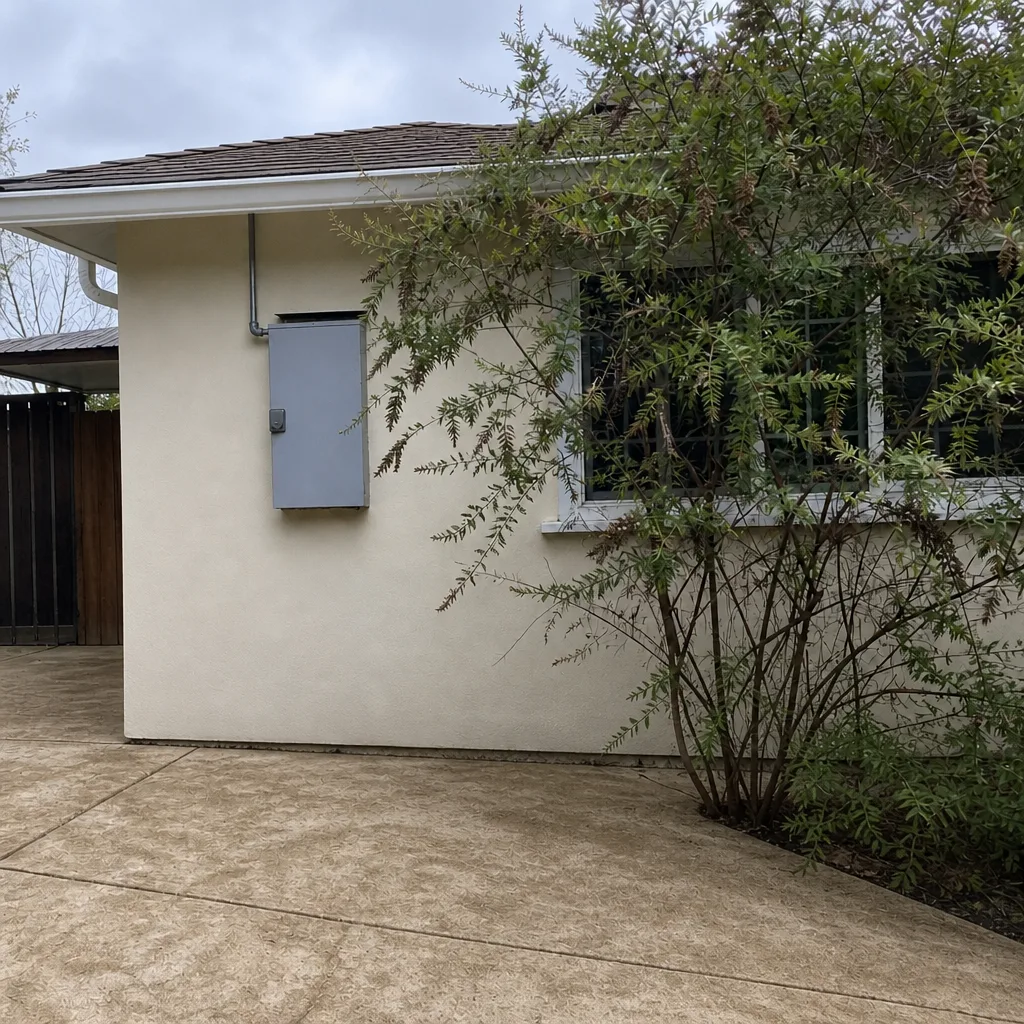
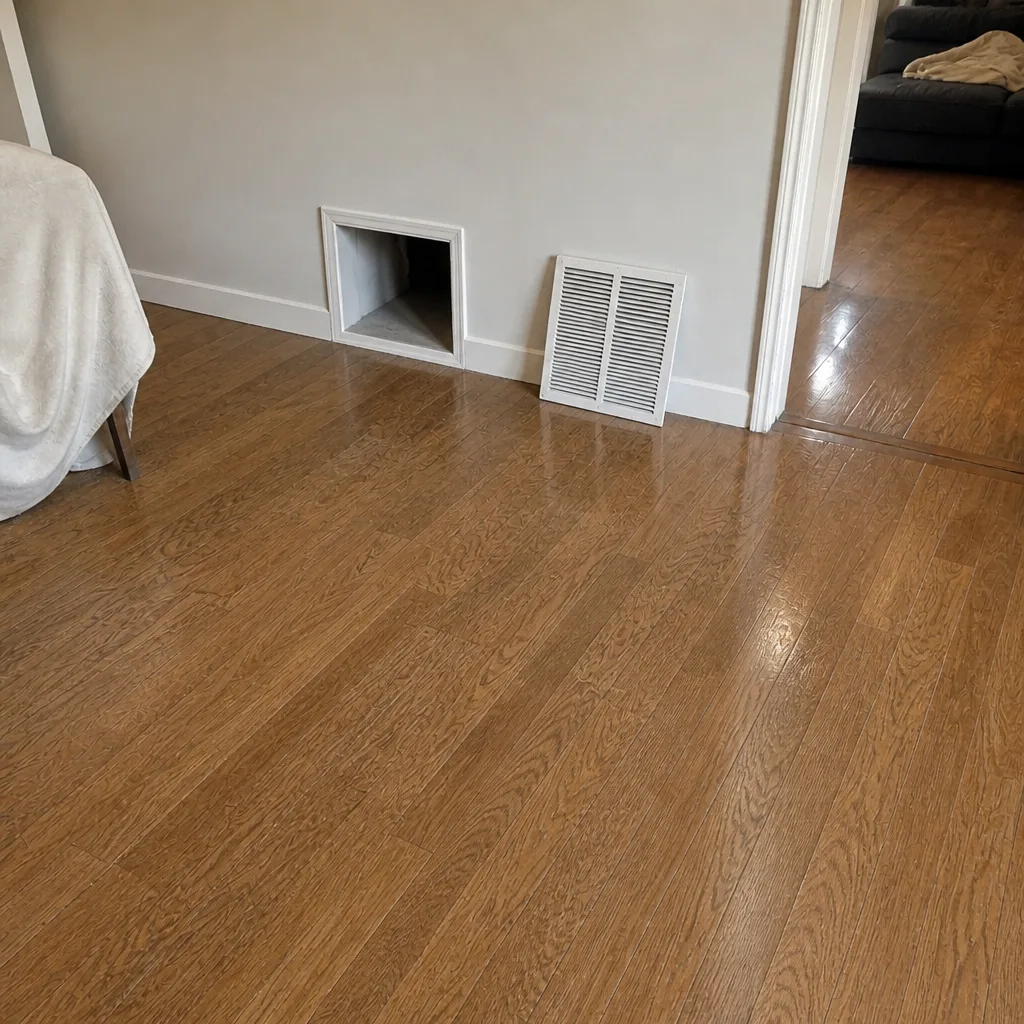
- Before-and-after photos of the ducts themselves
If a technician can’t show you the interior condition before and after, you don’t have a verifiable clean. That’s our standard, and it’s how we’d recommend judging any provider in Silver Lake.
Why Dryer Vents Run on a Faster, Separate Cadence
Dryer vent maintenance is the most commonly bundled-and-delayed item in residential HVAC care, and it’s the one with the clearest consequence for waiting. Lint accumulation in an exhaust run restricts airflow, raises dryer temperature, extends cycle times, and creates a fire hazard that has nothing to do with the ductwork carrying conditioned air through your house. A duct cleaning schedule and a dryer vent schedule are two different schedules with two different intervals, and they should never be merged into one appointment slot with one date attached.
The rule we work to is simple: dryer vent cleaning annually at minimum. Some households need it faster. If your dryer takes two cycles to dry a normal load, if the exterior vent flap doesn’t open fully during a cycle, or if the run is long with multiple elbows, the interval shortens. Lint builds at every joint and bend, and a run with three elbows loads up far sooner than a straight shot out the wall.
Why the failure to separate the two schedules matters:
- The duct clean gets booked at a five-year interval, and the dryer vent rides along on that same date. That’s five years of lint accumulation in a component that needs annual service.
- The homeowner gets a false sense of maintenance because “the ducts were done recently.”
- The vent run is rarely inspected independently, so a developing blockage goes unnoticed until the dryer starts underperforming or the safety issue escalates.
Book the dryer vent on its own annual reminder and keep it there. It’s a short appointment and the most important repeated maintenance item in the house.
Post-Renovation Protocol: The Off-Cycle Cleaning
Renovation dust operates on a different timescale than household dust, and it’s the single most common reason a cleaning interval gets thrown out. Drywall dust is fine, alkaline, and abrasive. Insulation fibers are heavier and lodge in duct lining more stubbornly than ordinary particles. Both load the system in a matter of days, not years, and both will keep circulating through the house long after the plastic sheeting comes down.
The protocol is to book a cleaning after the renovation is finished, not during, and not “at the next scheduled service.” Here’s the sequence we recommend:
- Complete all demolition, drywall, sanding, and paint work.
- Run the HVAC system for a day or two to let fine dust distribute into the filter. Replace the filter.
- Book a full professional cleaning with containment – this is the appointment where Abatement Technologies filtration actually matters, because dislodged drywall dust is exactly the material you don’t want recirculating into finished rooms.
- Ask for a sealing pass on any joints that were opened or disturbed during the work.
- Consider a sanitizing treatment if the renovation involved water damage, mold remediation, or a long period with the system off.
Don’t wait for the multi-year interval to come around. If you remodeled the kitchen in Silver Lake last spring and haven’t cleaned the ducts since, the system is carrying construction dust right now, and every cycle pushes it through the living space.
Logging Baseline Data So the Next Technician Can Measure
The biggest weakness in residential duct maintenance is that nobody records what the system looked like after the last cleaning. The next provider arrives, can’t tell how much contamination has accumulated, and either overstates the problem to justify a clean you didn’t need or undersells it because the ducts look “fine” from a glance at the register. Logging simple baseline data after a professional cleaning closes that gap.
What to record, and keep with your HVAC paperwork:
- The date of the cleaning
- Before-and-after photos of each accessible duct run, labeled by location
- The filter MERV rating installed at time of cleaning
- Any sealed leaks or repaired runs, and their location
- Whether sanitizing was performed and with what product (Guardsman, in our case)
- The measured static pressure at the air handler if the technician took it
With that in hand, the next technician can pull the photos and compare them against current conditions. That comparison – actual visual change over time – is real information. “It looks dirty” is not. If you can ask a provider to measure change rather than guess at it, the entire maintenance conversation gets more honest. We take those photos as standard on every job, and we’d recommend insisting on it from any provider in Silver Lake.
Wildfire Smoke and High-AQI Weeks in Silver Lake
Greater Los Angeles now has a seasonal smoke pattern, and it changes the maintenance math. During a high-AQI stretch, the HVAC system runs longer, pulls in more outside particulate, and deposits fine ash on the interior surfaces of the ducts and the air handler. The contamination isn’t dramatic from a single event, but the accumulation across a season is meaningful, and repeated seasons compound it. Odor compounds from smoke also settle into duct lining and can outlast the smoke event itself, leaving a faint smell every time the system runs.
What to do around a smoke event:
- Close fresh-air intakes if your system has one, and run the system on recirculate.
- Upgrade the filter to the highest MERV your system can handle without restricting airflow – a Honeywell or Aprilaire filter setup is where most households land on this.
- After the smoke clears, replace the filter and check registers for visible ash.
- If the smell persists after a filter change, book a cleaning with sanitizing. At that point the contamination is in the ducts, not the filter.
In a smoke-heavy year, a household already near the two-year end of its interval should move to the one-year end. That’s the load-factor principle applied to the local reality.
Where Filtration and Duct Repair Fit the Schedule
Cleaning, sealing, filtration, and treatment aren’t four separate maintenance events – they’re parts of one system, and the schedule works better when you treat them together. A cleaning on a leaking duct system will need to be repeated sooner, because the leaks pull in new contamination. A new premium filter on a leaking system is partially wasted for the same reason. This is why we treat air duct cleaning Silver Lake as a full-cycle service: diagnose, clean, repair leaks, and treat in a single visit.
What that means for your schedule:
- Duct repair and sealing belongs with the cleaning, not a separate appointment. Any leak found during the clean should be sealed before the system is put back into service.
- Filtration upgrades belong on the same visit. Going from a standard filter to a Honeywell or Aprilaire system is a ten-minute conversation and a single installation.
- Sanitizing is the finishing pass. Biological contaminants, mold spores, bacteria, and odor compounds get treated after the mechanical removal is done, not before.
One visit covers cleaning, any needed repairs, and sanitizing. No second appointments, no unanswered findings. That’s the schedule we’d build every Silver Lake household around, because the alternative – a cleaning that ignores a leak or a filter that’s undersized for the load – just means the next cleaning comes sooner.
Common Mistakes to Avoid
- Treating your dryer vent on the duct schedule. A multi-year interval applied to a component that needs annual service is the single most dangerous mistake in this guide. Keep the two tracks separate.
- Waiting out a renovation. Drywall dust loads the system in days. Book the cleaning after demolition and finish work, not at the next scheduled date.
- Skipping filters to extend the interval. A dirty filter bypasses contamination straight into the ducts, which shortens the interval rather than stretching it. Check monthly.
- Accepting a cleaning with no containment. If the provider isn’t setting up containment, dislodged contaminants recirculate into the living space during the service. Ask what gear they use before booking.
- Getting no before-and-after photos. Without visual evidence of the duct interior, you have no way to know the work was actually done. Ask for photos of your own ducts.
- Cleaning around a leak. A leaking system recontaminates itself. Any leak found during the clean should be sealed on the same visit.
- Taking a “same day, super cheap” quote at face value in Silver Lake. The flat price should cover the whole system, agreed before work starts. A per-vent price is usually a bait quote that grows once the technician is on site.
See the difference
 Before
 After
 Before
 After
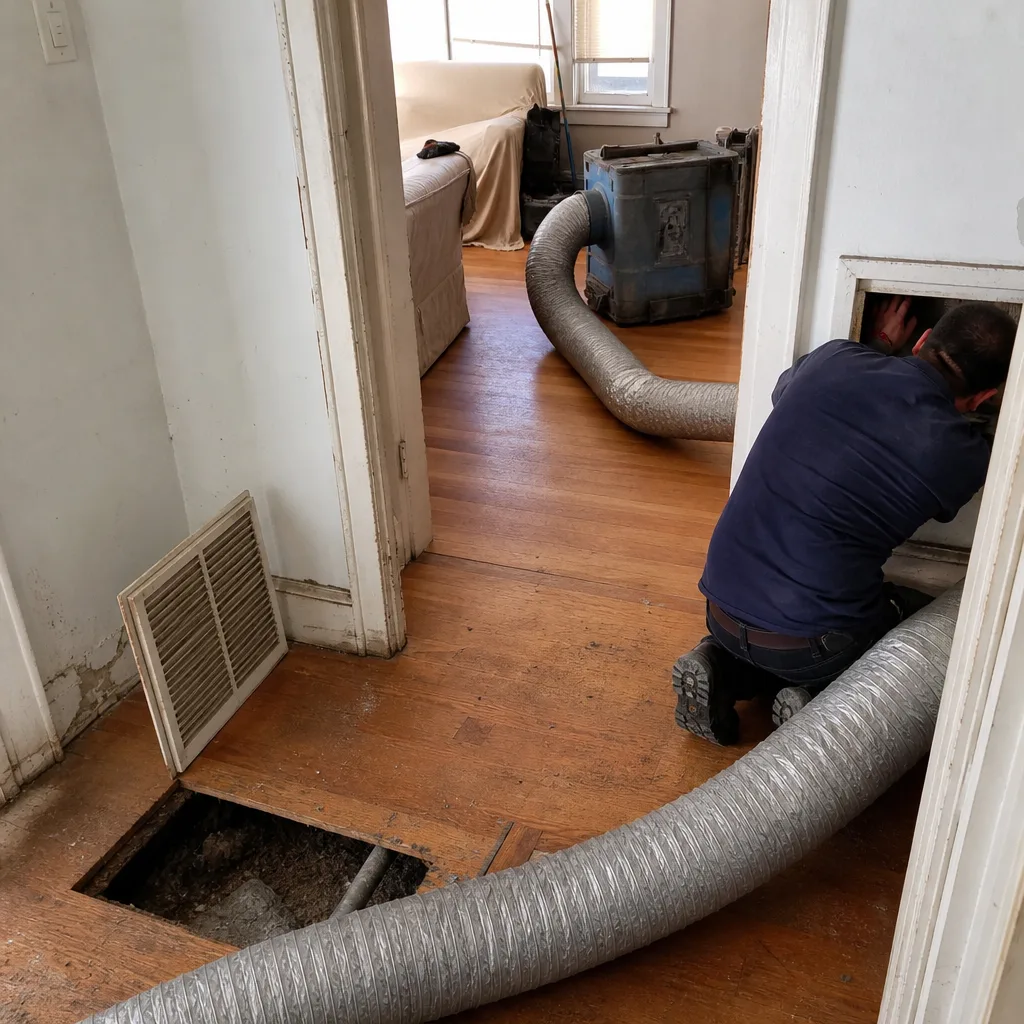 Before
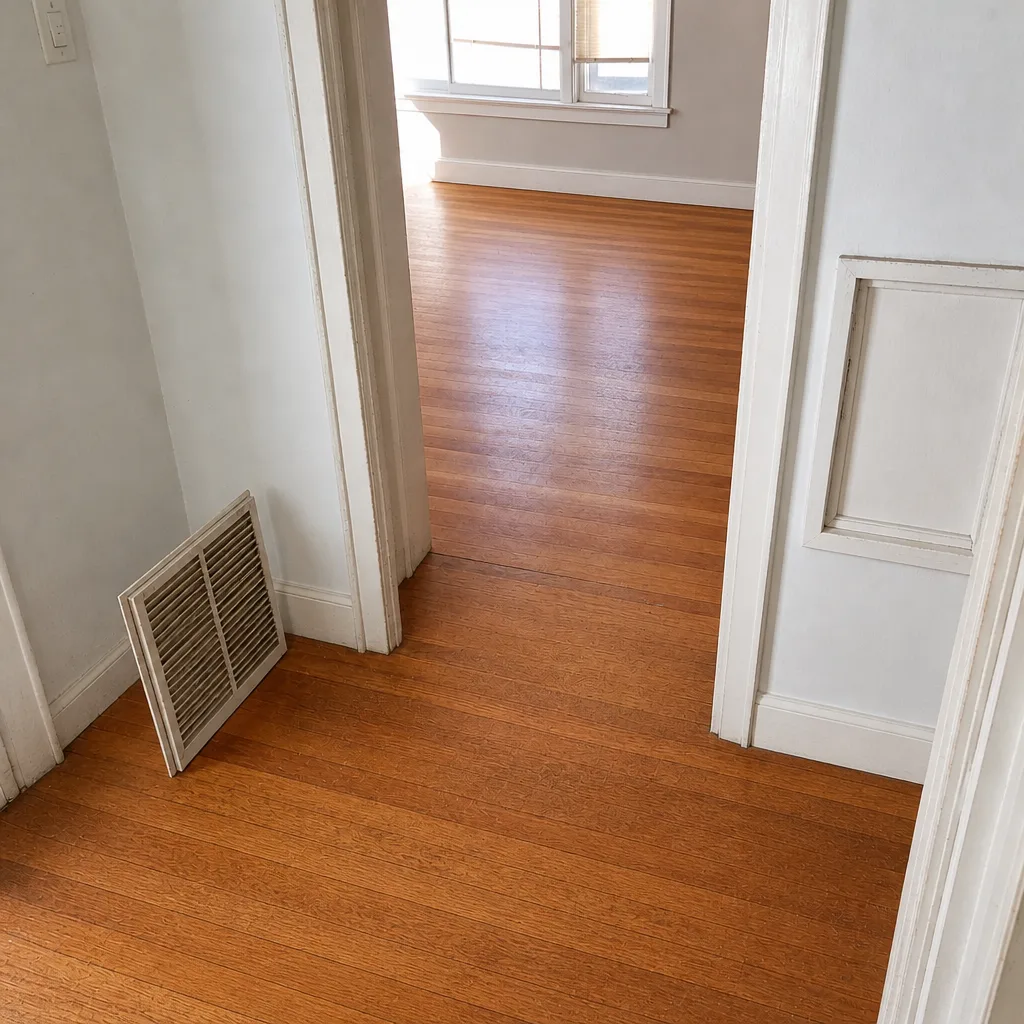 After
When to Call a Professional
Book a professional when the interval has elapsed, when a load factor has changed (new pet, new smoker in the house, renovation just finished), when you notice symptoms that point at the ducts – persistent dust on surfaces, a musty smell on system startup, allergy symptoms that worsen indoors – or when a smoke event has left a lingering odor after a filter change. Same-day service is available, and we answer 24/7 on the phone line. We provide a flat price per system agreed before work starts, before-and-after photos of your own ducts, and a satisfaction guarantee on the work. Air Duct Cleaning Silver Lake offers free estimates in Silver Lake – call (877) 492-0146. We answer 24/7. Fast dispatch from 7am to 7pm, Sunday through Friday.
Frequently Asked Questions
Every three to five years for a sealed system with no special load, and every one to two years if you have multiple pets, indoor smoking, repeated wildfire smoke seasons, or unsealed leaky ductwork. The interval is a function of your household’s contamination load, not a fixed calendar. Call (877) 492-0146 for an exact quote specific to your system – estimates are free.
The price is set per system by a written estimate, so it depends on the size of the home, the number of runs, and whether repair or sanitizing is included. We give you one flat price per system before work starts, not a per-vent rate and not a teaser coupon figure that grows on the day. That’s the difference between a price you can budget around and one that surprises you. Call (877) 492-0146 for an exact quote – estimates are free.
Cheap quotes typically cover a vacuum pass on the accessible registers, not mechanical agitation of the ducts or contained extraction. They leave the contamination on the duct lining, sometimes redistribute it, and skip the repair of any leaks found. The cheaper quote is cheaper because less work is done. Ask what equipment they use and whether containment is set up before you compare numbers. Call (877) 492-0146 for a free estimate and a clear scope.
Before-and-after photos of your own ducts, taken during the service. Without visual evidence of the interior, you have no way to confirm the contamination was removed rather than moved around. We take those photos on every job as standard. Call (877) 492-0146 to book a visit and see the difference for yourself.
Yes, if you’ve had multiple smoke seasons and notice a lingering odor after a filter change. Smoke deposits fine ash and odor compounds on duct surfaces and in the air handler, and a filter change doesn’t remove those. A cleaning with sanitizing is the right response when the smell outlasts the smoke event. Call (877) 492-0146 for an exact quote – estimates are free.
Yes, they can be scheduled together, but they belong on two different intervals – the dryer vent annually, the ducts on their multi-year cycle. That means the dryer vent appointment should still happen in the years between duct cleanings. Call (877) 492-0146 and we’ll book the two on their own schedules.
The Bottom Line
The “every three to five years” rule is a starting point, not a schedule. Your actual interval is driven by pets, smoking, renovation dust, wildfire smoke, and the condition of your ductwork – and any one of those can move the number by years. Build a tiered calendar: monthly filter checks, six-month register cleaning and visual inspection, annual dryer vent cleaning on its own track, and full professional cleanings on the interval that matches your load. Book the off-cycle cleaning after a renovation, and keep baseline photos so the next technician can measure change instead of guessing. Clean, sealed, and treated beats cleaned alone. If you’re ready to put a real schedule in place, call (877) 492-0146 for a free estimate.
Written by the team at Air Duct Cleaning Silver Lake.